A desire journal: private questions to know your own wants
A desire journal is a private notebook for noticing what you want, enjoy and refuse. Gentle questions, simple rules and ways to keep it safe.
Part of the guide: Exploring your sexuality at your own pace
By the SOMAS Management editorial team 4 min read
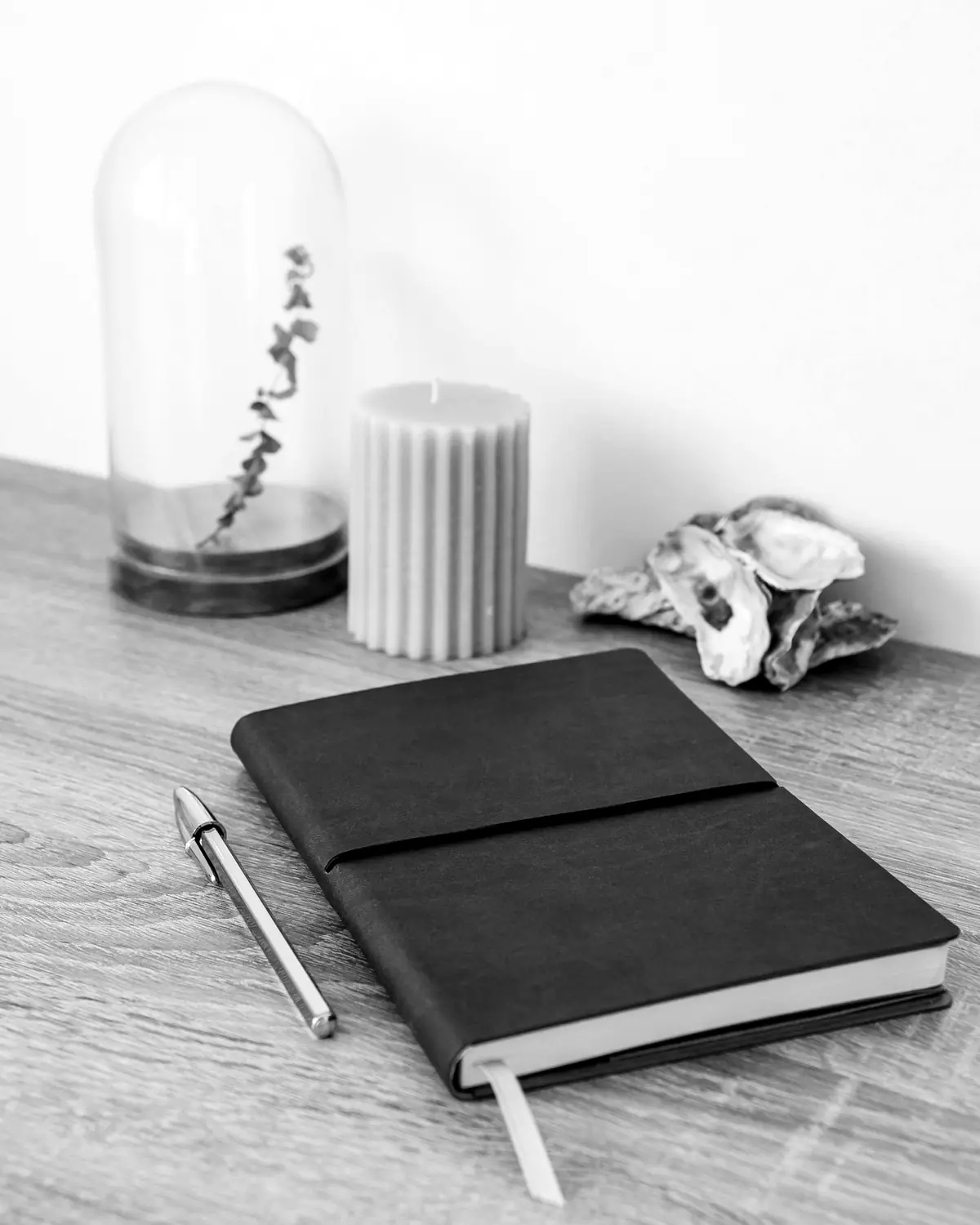
A desire journal is a private notebook where you write down what you notice about your own wants: what draws you in, what leaves you cold, what you might like to try one day and what you would rather never do. It is not a diary of events and it is not explicit. Nothing in it has to be shared, and nobody has to see it. Its purpose is simple: to help you hear yourself, so that your decisions come from what you actually want rather than from what you think you should want.
Why keep one
- Wants are easier to see once they are written down, because a thought on paper stops changing shape.
- You learn to tell your own wishes from other people’s expectations.
- You find words for what you like and what you do not, which makes boundaries easier to state.
- You notice how your wants move with the weeks, with stress, with sleep and with the people around you.
- Your curiosity gets a safe place to go, with no audience.
Keep it truly private
A journal only works if you feel free to be honest, and that depends on privacy. Decide where it will live before you write the first line.
- Paper: a plain notebook kept somewhere only you go, with nothing revealing on the cover.
- Phone or computer: a notes app protected by its own code, outside any shared or family account.
- Nothing stored in a place other people can open. Account security explains how to protect your accounts.
- You can tear out or delete pages at any time. A journal is yours to edit and to destroy.

Gentle questions to begin
Questions to start with
- What did I feel curious about this week?
- What made me feel at ease, and what made me feel tense?
- What would I like more of, and what would I like less of?
- Which thing do I think I should want, and do I actually want it?
- What would I say no to today, without needing a reason?
- Who or what makes me feel safe enough to explore?
Choose one or two questions per entry. A long list of questions can feel like an exam, and an exam is the opposite of what you are after.
A few rules that help
- 1
Keep it short
Three or four lines are enough. A tiny habit lasts longer than a large intention.
- 2
Write what is true today
Wants change. An entry describes a moment, not a rule for the future.
- 3
Do not judge
If a thought surprises you, write it down and let it be. Fantasies are common and normal, and a thought is not a commitment.
- 4
Skip days freely
A gap is not a failure. Come back when you feel like it.
- 5
Use plain words
You do not need correct terms. Your own words are the right ones.
Reading it back
Once a month, or whenever you feel like it, read the last few entries. Look for words that come back, for moments that felt steady and for moments that felt pressured. Mark them lightly, with a dot or a short note. What repeats is useful: it shows what matters to you and what wears you out.
Then, only if you wish, turn one finding into a sentence you could say to someone. Talking about desire offers gentle ways to do that, and exploring at your own pace helps you decide how fast to go.
When something heavy comes up
Writing can stir strong feelings, including sadness, shame or memories that are hard to bear. If that happens, stop for the day. Put the notebook away, drink some water, step outside, talk to someone kind. You owe the page nothing. If the feelings return often or do not ease, speaking with a professional can help, and where to look for a sex positive therapist is set out in a short guide.
A journal and your work
If you create content, a journal can also help you notice what you enjoy making, what you would rather leave out and when you need rest. It stays yours. No agency should ask to read it, and ours does not. What you share, with whom and when, is always your choice.
Questions and answers
Do I have to write every day?
No. Once or twice a week, or only when something stands out, works just as well. Regular enough to become a habit, light enough to stay pleasant.
What if someone finds it?
Plan for that before you write. Choose a private place, leave out names and details that could identify anyone, and keep nothing you could not explain. You can also write on loose pages and tear them up after reading them back.
Can I use an app?
Yes, if it is protected by its own code and does not sync with an account other people can open. Paper is simpler, but it can be found, so choose according to who has access to your home.
What if my wants change?
They will, and that is part of the point. Keep old entries if you want to see how far you have come, or discard them. Neither choice is wrong.
General wellbeing information, not medical advice. If something worries you, speak to a health professional.
Keep reading